
Delhi University admission is one of the most closely followed admission processes in India. Each year, students from every state compete for undergraduate seats across DU’s colleges, while graduates apply for postgraduate programmes in its departments and colleges, and working learners look at open and non collegiate routes. Each of these follows a different process, with its own tests, portals, timelines and documents. This complete guide brings them together in one place, so that students and parents can see the full picture of Delhi University admission before choosing a route.
This guide by vidyanirbhar is for Class 12 students, graduates, working professionals and parents interested in studying at DU. We cover undergraduate admission through CUET UG and the Common Seat Allocation System, postgraduate admission through CUET PG, other routes such as the School of Open Learning and the Non Collegiate Women’s Education Board, reservation and quotas, documents, fees and a timeline. We use Lady Shri Ram College for Women as a real example of how a well known DU college fits within the centralised admission process.
Overview of DU Admission Routes
| Route | Who It Is For | Basis of Admission |
|---|---|---|
| Undergraduate (regular colleges) | Class 12 pass students | CUET UG scores and CSAS UG seat allocation |
| Postgraduate | Graduates | CUET PG for many programmes, DU’s postgraduate portal |
| PhD and research | Postgraduates | UGC regulations, national tests and DU’s own procedures |
| School of Open Learning | Students who prefer open and distance learning | Eligibility based admission as notified |
| Non Collegiate Women’s Education Board | Women students in Delhi who study through weekend classes | Eligibility based admission as notified |
Undergraduate Admission: The Main Route
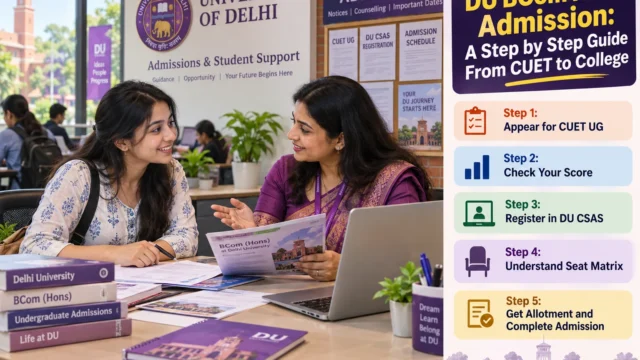
Step 1: Appear for CUET UG
Since 2022, most undergraduate programmes at DU admit students through CUET UG, conducted by the National Testing Agency. Choose CUET languages, domain subjects and, where needed, the general test that match the programmes you want. The DU bulletin lists required combinations for each programme.
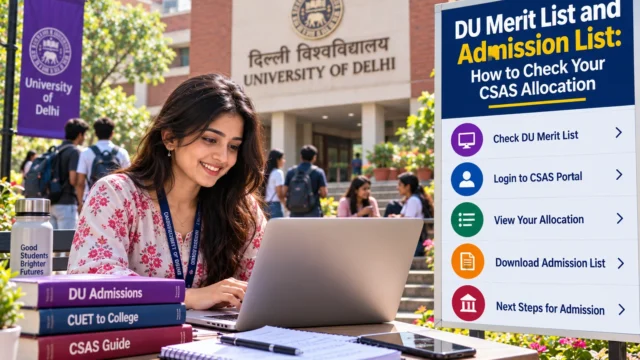
Step 2: Register on CSAS UG
DU’s Common Seat Allocation System opens before CUET results. In phase 1, students register, fill details, upload documents and pay a registration fee. For the 2025 cycle, registration opened on 17 June 2025, with fees of ₹250 for general and OBC candidates and ₹100 for SC, ST and PwBD candidates, plus extra fees for certain quotas and trial based programmes.
Step 3: Fill Preferences After CUET Results
In phase 2, students select programme and college combinations in order of preference. In 2025, DU offered 71,624 undergraduate seats across 79 programmes and 186 BA programme combinations, so careful preference filling matters.
Step 4: Seat Allocation, Acceptance and Fee Payment
DU allocates seats in rounds based on CUET scores, preferences, category and availability. Students accept allocated seats within the deadline, choose to freeze or upgrade, then pay fees after college approval. The current year’s process is published on the University of Delhi website and its admission portal.
Postgraduate Admission
Many DU master’s programmes, such as MA, MSc and MCom, admit through CUET PG scores and DU’s postgraduate admission portal, where candidates fill preferences and accept allocations. Some programmes have additional requirements or separate procedures. Final year undergraduates can usually apply provisionally, provided they complete their degree by the specified date.
PhD and Research Admission
PhD admissions at DU follow UGC regulations and university ordinances. Candidates may qualify through national tests such as UGC NET or CSIR NET, or through processes notified by the university, often followed by interviews. Departments publish seat availability and research areas in their notices. Read each department’s notice carefully, since eligibility and selection methods differ, and prepare a short research proposal if the department asks for one.
Other Routes: SOL and NCWEB
School of Open Learning
DU’s School of Open Learning offers undergraduate and postgraduate programmes in open and distance mode. It suits students who are working, preparing for competitive exams or unable to attend regular classes for personal reasons. Admission is generally based on eligibility rather than CUET for many programmes, as notified each year.
Non Collegiate Women’s Education Board
NCWEB offers undergraduate programmes for women students in Delhi through classes held mainly on weekends at teaching centres in DU colleges. Admission rules, including eligibility and merit, are notified each year.
Real Example: Lady Shri Ram College for Women
Lady Shri Ram College for Women was founded in 1956 and is a women’s college of the University of Delhi in South Delhi. It offers undergraduate programmes in humanities, social sciences and commerce, along with some postgraduate programmes, and is widely recognised for its academic and co-curricular culture. Like other DU colleges in the centralised system, it admits undergraduate students through CUET UG and CSAS rather than its own entrance test for most programmes. Students list LSR programme combinations in their CSAS preferences, and seats are allocated based on scores, preferences and category. Students can view the University of Delhi profile on VidyaNirbhar for an overview of its colleges.
The example shows that applicants to a particular college do not apply to it separately. Instead, they must secure strong CUET scores in the right subjects, rank the college’s combinations appropriately in CSAS and respond quickly to allocation rounds. Women’s colleges such as LSR admit only women students, which applicants should keep in mind when filling preferences.
Choosing the Right Programme Before Applying
DU offers a wide range of undergraduate programmes, from single subject honours degrees to multidisciplinary BA programme combinations, along with BCom, BSc and professional programmes such as management studies. Under the four year undergraduate structure introduced from 2022-23, students can exit with a certificate, diploma or degree at different stages or continue to a fourth year with honours or research. Before applying, compare programmes on subject interest, CUET requirements, career goals and the colleges that offer them. A BA programme combination may suit a student who wants breadth, while an honours degree suits one who is sure of a subject.
Tips for Outstation Students
Students from outside Delhi face extra planning. Hostel seats are limited, so apply as soon as hostel notices open after admission, and keep a backup plan for paying guest or rented accommodation near your college. Budget for rent, food, metro travel and books in rupees. Keep digital and printed copies of all documents, since verification may happen online first and in person later. Arrive a few days before classes to settle in, open a local bank account if needed and learn your commute.
Using Previous Years’ Data Wisely
Many students look at previous allocation data to judge their chances. This is useful only as a rough guide, because CUET difficulty, the number of applicants, seat matrices and student preferences change every year. Use past data to group options into ambitious, moderate and safe choices, then rank them honestly by what you want rather than chasing a particular college name.
Reservation and Quotas
As a central university, DU follows central government reservation for SC, ST, OBC (non creamy layer, central list), EWS and PwBD candidates. It also notifies quotas and supernumerary seats, such as sports and extracurricular activities quotas, and seats for certain groups, subject to rules in each year’s bulletin. Minority institutions within DU may reserve seats for their communities as permitted. Keep valid certificates ready, since OBC NCL and EWS certificates must meet the validity dates specified.
Documents Checklist
- Class 10 and Class 12 mark sheets and certificates
- CUET UG or CUET PG scorecard and application number
- Graduation mark sheets, for postgraduate applicants
- Category, PwBD and quota certificates as applicable
- Photograph, signature and identity proof
- Migration and transfer certificates, if required by the college
Fees
Fees vary by college and programme. Regular programmes at DU colleges generally cost much less than many private universities, while self financing programmes can cost more. Hostel fees, where seats are available, are separate. Check the fee structure of each college for the current academic year, and note that fee concessions and scholarships are available for eligible students. Central and Delhi government scholarships, along with college level support, can reduce costs, so apply as soon as scholarship portals open after admission.
A Year Round Timeline
| Period | Undergraduate | Postgraduate |
|---|---|---|
| Early in the year | CUET UG application with correct subjects | CUET PG application |
| Spring to early summer | Board exams, CUET UG preparation and test | CUET PG test |
| June to July | CSAS UG registration, CUET results, preference filling | PG portal registration and preferences |
| July to September | Seat allocation rounds, admission, classes begin | Allocation rounds, admission, classes begin |
Exact dates change every year, so check the NTA and DU websites regularly and set reminders for each deadline.
Common Mistakes Applicants Make
- Choosing CUET subjects that do not match target DU programmes
- Missing CSAS registration before CUET results
- Filling too few preferences or ranking them carelessly
- Missing acceptance or fee deadlines during allocation rounds
- Using invalid category certificates
- Assuming all Delhi colleges are part of DU
Conclusion
Delhi University admission covers several routes, from CUET based undergraduate admission through CSAS to postgraduate, research, open learning and NCWEB options. Choose the right route, plan CUET subjects early, register on time, fill preferences carefully and keep documents valid. Lady Shri Ram College for Women shows how individual colleges fit into DU’s centralised system, where scores, preferences and timely action decide outcomes. Vidyanirbhar prepares these guides so that students can approach DU with a clear, complete plan. You can compare DU colleges and other universities across India on VidyaNirbhar.
Frequently asked questions
What is the Delhi University admission process for undergraduate courses?
Appear for CUET UG with subjects matching your target programmes, register on DU's CSAS UG portal, fill programme and college preferences after CUET results, then accept an allocated seat, complete college verification and pay fees within the deadline during the allocation rounds.
How many UG seats are there in Delhi University?
For the 2025 admission cycle, DU offered 71,624 undergraduate seats through CSAS, across 79 programmes and 186 BA programme combinations. Seat numbers can change each year, so check the current information bulletin and seat matrix on DU's admission portal before filling preferences.
Can I get admission in DU without CUET?
For most regular undergraduate programmes, CUET UG is required. Routes such as the School of Open Learning and the Non Collegiate Women's Education Board generally admit on eligibility as notified. Check the current year's notices for each route before applying.
How does DU postgraduate admission work?
Many DU postgraduate programmes admit through CUET PG scores and the university's postgraduate admission portal, where candidates fill preferences and accept allocated seats. Some programmes have additional requirements. Read the postgraduate bulletin for eligibility, seat numbers and programme-specific rules each year.
What is the registration fee for DU CSAS UG?
In the 2025 cycle, the CSAS UG registration fee was ₹250 for general and OBC candidates and ₹100 for SC, ST and PwBD candidates, with additional fees for certain quotas and trial based programmes. Fees may change, so confirm on the current portal.