
You have just cleared your 12th board exams. Now everyone around you is asking the same question: “Which university are you joining?” Your relatives, your friends, even the neighbour aunty. But if you stop and think, do you actually know what a university is? How is it different from the college in your city? And why does it matter so much for your future?
Don’t worry. Most students are confused about this, and that is completely normal. In this guide, we will explain what is university in very simple words, the types of universities in India, how they work, how to take admission after 12th, and how to check whether a university is genuine or fake. By the end, you will be able to take a much better decision about your higher studies.
Quick Answer: What Is a University?
A university is a higher education institution that teaches students after Class 12 and has the legal power to award its own degrees, such as BA, BSc, BCom, BTech, MA, MBA and PhD. In India, a university must be set up by a Central or State Act, or be declared a university by the UGC or the Central Government. Colleges usually teach students, but it is the university that conducts exams and gives the final degree.
What Is a University? Meaning in Simple Words
Think of a university as the “head office” of higher education. It is a big institution where students study after school, learn a subject in depth, write exams and finally receive a degree certificate. That degree is what employers, government recruiters and foreign universities look at when they judge your qualification.
The word “university” comes from the Latin word universitas, which means “a whole” or “a community”. In old times, it meant a community of teachers and students who came together to learn. The idea is still the same today.
Official Definition of University in India
In India, the word “university” is protected by law. According to Section 2(f) of the UGC Act, 1956, a university means a university established or incorporated by a Central Act, a Provincial Act or a State Act, and includes any institution recognised by the UGC under the Act. Deemed to be universities are declared under Section 3 of the same Act.
In simple language, no institute can call itself a “university” just because it wants to. It needs legal approval from the government. This is the main reason why a university degree is valid and trusted across India.
Three Main Jobs of a University
- Teaching: It runs undergraduate, postgraduate, diploma and doctoral programmes in many subjects.
- Research: It creates new knowledge through research projects, PhD scholars and labs.
- Awarding degrees: It conducts examinations, declares results and gives degrees in its own name. This is the power that a normal college does not have.
University vs College vs Institute: What Is the Difference?
This is the biggest confusion among 12th pass students. Many people use “college” and “university” as if they mean the same thing. In India, they are different.
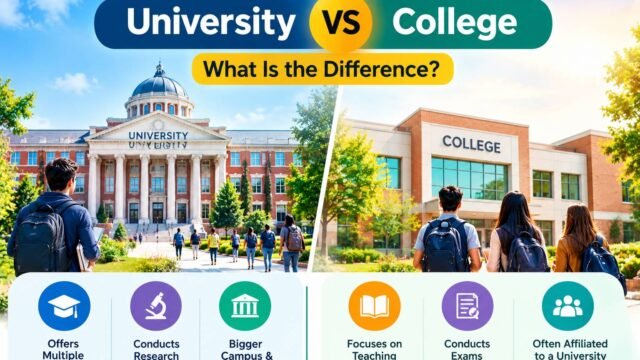
The simplest way to understand it: a college teaches you, but a university certifies you. For example, if you study BCom at a college in Pune that is affiliated to Savitribai Phule Pune University, your classes happen at the college, but your exams and your degree come from the university.
| Point | University | College | Institute of National Importance (INI) |
|---|---|---|---|
| Who creates it | Central or State Act, or UGC / Centre (deemed) | Trust, society, government or university | Special Act of Parliament |
| Can it give its own degree? | Yes | No (except autonomous colleges in some cases, but degree is still in university’s name) | Yes |
| Who conducts exams | The university itself | Affiliating university (autonomous colleges set their own papers) | The institute itself |
| Size | Large, many departments and often many colleges under it | Smaller, fewer courses | Usually focused on one field |
| Research and PhD | Yes | Rarely | Yes, strong focus |
| Examples | University of Delhi, BHU, University of Mumbai | Hindu College, St. Xavier’s College | IITs, NITs, AIIMS, IIMs |
What Is an Autonomous College?
An autonomous college is still linked to a university, but it gets freedom to design its own syllabus, conduct its own exams and declare results. However, the degree is usually awarded by the parent university. So, it sits somewhere between a normal college and a university.
Is IIT a University?
Technically, IITs are not called universities. They are Institutes of National Importance, created by the Institutes of Technology Act passed by Parliament. But they have the same power to award degrees like BTech, MTech and PhD, and their degrees are fully valid. The same is true for NITs, AIIMS and IIMs.
Types of Universities in India
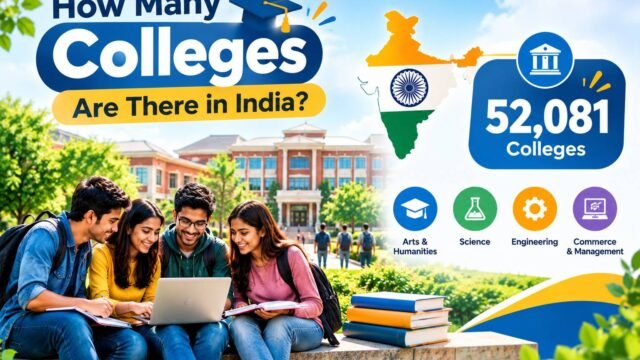
India has one of the largest higher education systems in the world. As per the Press Information Bureau, India had 1,338 universities and 52,081 colleges as of June 2025, up from 760 universities in 2014-15. These universities are divided into four main types, plus the special category of Institutes of National Importance.
1. Central Universities
Central universities are set up by an Act of Parliament and are funded by the Ministry of Education, Government of India. Fees are usually low and admission to most undergraduate courses happens through CUET-UG.
Examples: University of Delhi, Jawaharlal Nehru University (JNU), Banaras Hindu University (BHU), Aligarh Muslim University, University of Hyderabad.
2. State Universities
State universities are created by an Act of the State Legislature and are funded by the state government. Most of them have hundreds of affiliated colleges across districts. If you are studying in a government or private college in your town, it is most likely affiliated to a state university.
Examples: University of Mumbai, University of Calcutta, Anna University, Osmania University, Savitribai Phule Pune University.
3. Deemed to Be Universities
These are institutions that are doing excellent work in a particular area, so the Central Government, on the advice of UGC, declares them “deemed to be university” under Section 3 of the UGC Act. They get the power to award their own degrees. As per UGC directions, they should write “Deemed to be University” with their name.
Examples: Indian Institute of Science (IISc) Bengaluru, Birla Institute of Technology and Science (BITS) Pilani, Manipal Academy of Higher Education, Symbiosis International.
4. State Private Universities
These are set up by a private trust, society or company through a separate State Act. They do not usually receive government funds, so the fees are generally higher. Many of them have modern campuses and strong industry tie-ups, but quality differs a lot from one to another, so check carefully before taking admission.
Examples: Ashoka University, Amity University, Shiv Nadar University, Lovely Professional University (LPU), Chandigarh University.
5. Institutes of National Importance (INIs)
These are not “universities” by name, but they have full degree-giving power through special Acts of Parliament. According to the same PIB note, India had 23 IITs, 21 IIMs and 20 AIIMS in 2024-25.
Other Categories You May Hear About
- Open universities: Offer distance learning, for example IGNOU (Indira Gandhi National Open University).
- Agricultural universities: Focus on farming, veterinary and allied sciences, for example Punjab Agricultural University.
- Institutions of Eminence (IoE): A special tag given by the government to selected top institutions for extra freedom and funding.
| Type | Set up by | Funded by | Fee level (general) |
|---|---|---|---|
| Central University | Act of Parliament | Central Government | Low |
| State University | State Act | State Government | Low to moderate |
| Deemed to Be University | Central Govt on UGC advice | Govt or private | Moderate to high |
| State Private University | State Act (private sponsor) | Self-financed | Moderate to high |
| Institute of National Importance | Special Act of Parliament | Central Government | Varies (usually subsidised) |
Who Controls and Regulates Universities in India?
Universities in India do not work on their own rules alone. Several government bodies keep a check on quality, fees, courses and recognition. Knowing these names will help you judge a university better.
| Body | Full form | What it does |
|---|---|---|
| UGC | University Grants Commission | Recognises universities, releases funds, sets rules and publishes the list of fake universities |
| AICTE | All India Council for Technical Education | Approves engineering, management, pharmacy and other technical programmes |
| NAAC | National Assessment and Accreditation Council | Checks quality and gives grades to universities and colleges |
| NIRF | National Institutional Ranking Framework | Ministry of Education’s yearly ranking of institutions |
| NMC | National Medical Commission | Approves MBBS and medical colleges |
| BCI | Bar Council of India | Approves law degrees like LLB and BA LLB |
| NCTE | National Council for Teacher Education | Approves teacher training courses like BEd |
| PCI / INC / DCI | Pharmacy, Nursing and Dental Councils | Approve pharmacy, nursing and dental courses |
Important update for students: The government introduced the Viksit Bharat Shiksha Adhishthan Bill, 2025 in the Lok Sabha on 15 December 2025. It plans to replace UGC, AICTE and NCTE with one single higher education regulator. The Bill was sent to a Joint Parliamentary Committee on 16 December 2025. Until the new law is passed and notified, UGC and the other bodies continue to do their work, so you should keep checking the UGC website for recognition.
How Does a University Work? Structure Explained
A university is like a big organisation with many people doing different jobs. Here is who does what, in simple terms.
- Chancellor: The ceremonial head. In most state universities, the Governor of the state is the Chancellor. In central universities, the President of India is the Visitor.
- Vice-Chancellor (VC): The real working head of the university, like the CEO of a company. The VC manages daily administration and academic decisions.
- Registrar: Handles records, admissions, documents and official paperwork.
- Controller of Examinations: Plans exams, releases admit cards and declares results.
- Deans and Faculties: A faculty is a group of related departments, like the Faculty of Science or the Faculty of Commerce. Each faculty is led by a Dean.
- Departments: Each subject, like Physics, Economics or English, has its own department headed by a Head of Department (HoD).
- Professors, Associate Professors and Assistant Professors: The teachers who take classes and guide research.
Teaching Departments and Affiliated Colleges
Most Indian universities work in two ways at the same time:
- University Teaching Departments (UTDs): Courses taught on the main university campus by the university’s own faculty. These are usually PG and PhD programmes, and sometimes UG.
- Affiliated Colleges: Colleges spread across cities and districts that teach students but follow the university’s syllabus and exam system. For example, the University of Mumbai and the University of Calcutta each have a large number of colleges under them.
So, when you get admission to an affiliated college, you are indirectly a student of the university as well. Your marksheet and degree will carry the university’s name.
What Courses and Degrees Does a University Offer?
A university offers courses at different levels. After 12th, you will start at the undergraduate level and can move up step by step.
| Level | Common courses | Usual duration | Who can apply |
|---|---|---|---|
| Certificate / Diploma | Diploma in Computer Applications, certificate courses | 6 months to 2 years | 10th or 12th pass |
| Undergraduate (UG) | BA, BSc, BCom, BBA, BCA, BTech, BPharm, LLB (5-year integrated), MBBS | 3 to 5.5 years | 12th pass |
| Postgraduate (PG) | MA, MSc, MCom, MBA, MCA, MTech, LLM | 1 to 3 years | Graduates |
| Doctoral | PhD | 3 to 6 years | Postgraduates (and 4-year UG with research in some cases) |
The New Four-Year UG Programme Under NEP 2020
Many universities, including Delhi University, now follow the Four-Year Undergraduate Programme (FYUGP) under the National Education Policy 2020. The good part is that it gives you flexibility:
- Leave after 1 year and you get a Certificate.
- Leave after 2 years and you get a Diploma.
- Complete 3 years and you get a Bachelor’s Degree.
- Complete 4 years and you get a Bachelor’s Degree with Honours or Honours with Research.
Your credits are stored in the Academic Bank of Credits (ABC) through your APAAR ID, so you can take a break and join again later.
Regular, Distance and Online Modes
- Regular mode: You attend classes on campus. This is the most common and most preferred mode.
- Distance (ODL) mode: You study from home with study material and attend a few contact classes. Good for working students.
- Online mode: Classes and exams happen online. Only UGC-entitled universities can offer online degrees, so check the UGC-DEB website before joining.
How to Get Admission in a University After 12th
Admission rules depend on the type of university and the course you choose. Broadly, there are three routes.
1. Through Entrance Exams
Most good universities now admit students through a national or state-level entrance exam.
| Exam | Conducted by | Used for |
|---|---|---|
| CUET-UG | National Testing Agency (NTA) | UG admission in central universities and many state, deemed and private universities |
| JEE Main / JEE Advanced | NTA / IITs | BTech in NITs, IIITs and IITs |
| NEET-UG | NTA | MBBS, BDS, BAMS, BHMS and other medical courses |
| CLAT | Consortium of NLUs | 5-year law courses in National Law Universities |
| NCHM JEE | NTA | Hotel management |
| State CETs | State bodies (e.g. MHT CET, KCET, AP EAPCET) | Engineering, pharmacy and more in state institutions |
| University-level tests | Private or deemed universities (e.g. BITSAT, SET, VITEEE) | Admission to that university only |
2. Merit-Based Admission
Some state universities and their affiliated colleges still give admission on the basis of your 12th board marks. They release cut-off lists, and you get a seat if your percentage is above the cut-off.
3. Direct or Management Quota Admission
Many private universities give direct admission based on 12th marks, an interview or their own test. Be careful with any agent who promises “guaranteed admission” for money.
Step-by-Step Admission Process
- Decide your stream and course (for example, BSc Physics or BCom).
- Make a list of universities that offer it and check their eligibility.
- Register for the required entrance exam on time (CUET-UG forms usually come out in February or March).
- Appear for the exam and check your score.
- Fill the university’s own admission or counselling form.
- Get your documents verified: 10th and 12th marksheets, transfer certificate, migration certificate, caste or EWS certificate (if any), ID proof and photos.
- Pay the fee and confirm your seat.
How to Check If a University Is Genuine or Fake
Every year, many students lose money and precious years by joining fake universities. These places print a nice website, give big newspaper ads and even hand over “degrees”, but those degrees have no value for jobs or higher studies.
As per Careers360, the UGC listed 32 fake universities across India as of February 2026, up from 22 the year before. Delhi had the highest number (12), followed by Uttar Pradesh (4).
6-Point Checklist Before You Take Admission
- Check the UGC list: Search the university’s name on the official UGC website under the list of Central, State, Deemed and Private universities.
- Check the UGC fake university list: UGC publishes this list on its website and updates it regularly.
- Check course approval: For BTech, MBA or BPharm, check AICTE or PCI approval. For MBBS, check NMC. For law, check BCI.
- Check NAAC grade and NIRF rank: A NAAC grade (A++, A+, A and so on) and an NIRF rank are good signs of quality.
- Check online or distance approval: For ODL or online degrees, the university must be listed on the UGC-DEB portal for that specific course and session.
- Visit the campus: If possible, go and see the campus, labs, library and hostel yourself, and talk to current students.
Red Flags to Watch Out For
- Promise of a degree in a very short time, like “BA in 6 months”.
- No clear address, or only a small office in a commercial building.
- “No exam, no attendance, guaranteed degree” type advertisements.
- Name sounds like a famous university but with a small change.
- Agents asking for full fees in cash without a proper receipt.
How to Choose the Right University for You
There is no single “best university” for everyone. The right one is the university that fits your course, budget, location and career goals. Use these points to compare options.
- Recognition first: Make sure it is recognised by UGC and the course is approved by the right council. Never compromise on this.
- Course and syllabus: Look at the subjects you will actually study. Are they updated? Do they include practicals, projects or internships?
- Faculty: Check how many teachers are PhD holders and whether they have industry or research experience.
- NAAC grade and NIRF rank: Use these as a starting filter, not the only filter.
- Placements and higher studies: Ask for real placement data, like the number of students placed, the companies and the median salary, not just the highest package.
- Fees and scholarships: Calculate the total cost for the full course, including hostel, mess and exam fees. Check government and university scholarships you can apply for.
- Location and safety: Think about distance from home, cost of living in that city, and hostel facilities, especially for girl students.
- Campus life: Library, labs, sports, clubs and events all help you grow as a person, not just as a student.
- Alumni and reviews: Talk to seniors on LinkedIn or social media. They will tell you the real picture.
Tip: Shortlist at least 5 to 8 universities: 2 dream choices, 3 to 4 realistic choices and 1 or 2 safe choices. This way, you will not be stuck if your first preference does not work out.
Benefits of Studying at a University
Going to university is not just about getting a degree. It shapes the next few years of your life in many ways.
- A recognised degree: Needed for most government jobs, private jobs, competitive exams like UPSC and SSC, and higher studies in India and abroad.
- Subject depth: You learn one subject properly, from basics to advanced level.
- Career options: Campus placements, internships and industry projects open doors to good jobs.
- Research opportunities: You can work with professors on projects and later go for a PhD.
- Skill building: Presentations, group projects, debates and clubs build communication and leadership skills.
- Network: The friends, seniors and teachers you meet at university often help you throughout your career.
- Independence: Living in a hostel or a new city teaches you to manage money, time and responsibilities on your own.
Frequently Asked Questions (FAQs)
What is university in simple words?
A university is a higher education institution where students study after Class 12. It teaches courses, does research and, most importantly, has the legal power to award degrees like BA, BSc, BCom, BTech, MA and PhD.
What is the difference between a college and a university?
A college mainly teaches students, while a university conducts exams and awards degrees. Most colleges in India are affiliated to a university, so the degree you get from a college carries the university’s name.
How many universities are there in India?
As per the Press Information Bureau, India had 1,338 universities as of June 2025, along with 52,081 colleges.
Which is better: a government university or a private university?
Both can be good. Government universities usually have lower fees and a strong reputation. Some private universities offer modern facilities and better industry links. Compare recognition, faculty, placements and fees before you decide.
Is a deemed university degree valid?
Yes. A degree from a UGC-recognised deemed to be university is fully valid for jobs and higher studies. Just make sure the university and the specific course are approved.
Is IIT a university?
IITs are Institutes of National Importance, not universities by name. But they have full powers to award degrees, and their degrees are valid and highly respected.
Can I get admission in a university without an entrance exam?
Yes, many state and private universities still admit students on the basis of 12th marks. However, most central universities now require a CUET-UG score for UG admission.
What is the minimum age to join a university?
There is generally no fixed minimum age for UG courses. You just need to pass Class 12 from a recognised board. Some courses, like MBBS through NEET-UG, have their own age rules, so check the official notice.
How do I know if a university is fake?
Check the UGC website. If the university is not in UGC’s list of recognised universities, or its name appears in UGC’s fake university list, do not take admission there.
What is a Vice-Chancellor?
The Vice-Chancellor is the chief executive and academic head of a university. They manage everyday administration and important academic decisions.
Conclusion
So now you know what is university and why it matters so much. A university is the institution that gives your degree its value. It can be central, state, deemed or private, and each type has its own fee structure, admission process and strengths. Colleges teach, but universities certify, and bodies like UGC, AICTE and NAAC make sure the system stays genuine.
Before you fill any admission form, take a few minutes to check recognition, course approval and the UGC fake list. Then compare courses, fees, faculty and placements calmly. A little research today can save you years of regret later.
All the best for your next step. Keep exploring VidyaNirbhar.com for detailed guides on universities, courses and admissions across India.
Published by VidyaNirbhar.