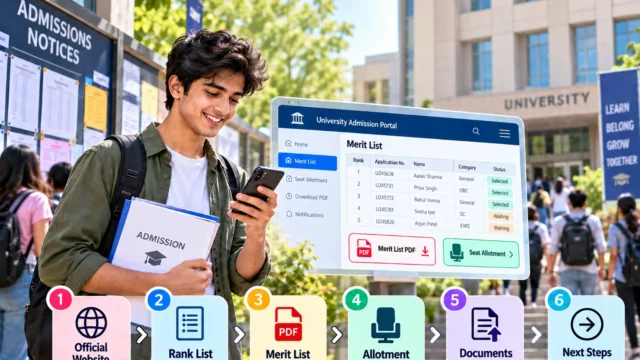

Knowing how to choose a college after Class 12 matters because, for most undergraduate students in India, the college shapes daily learning far more than the university name on the degree. Most students study in colleges affiliated to state universities, where teaching quality, facilities, fees and peer environment vary a lot from one college to the next, even within the same university. Picking the right college means looking closely at the college itself, not just its university.
This guide by vidya nirbhar is for Class 12 students, parents and school counsellors. We explain the types of colleges you will come across, the checks that matter most, how to compare fees and quality, and how centralised admission systems work. We use Gujarat’s common admission portal as a real example of how many states now handle college admissions. By the end, you will have a practical plan for shortlisting and choosing a college that fits your course, budget and goals.
Understand the Types of Colleges First
Colleges in India fall into a few broad groups, and each type has different fees, management and admission rules.
| Type | Who Runs It | Typical Fees | Points to Note |
|---|---|---|---|
| Government college | State government | Usually lowest | High demand, limited seats, facilities vary |
| Grant in aid (aided) college | Private management with government grants | Low to moderate for aided programmes | May also run self financing programmes at higher fees |
| Self financing college | Private management, no grants | Usually higher | Quality varies widely, check carefully |
| Autonomous college | Any of the above, with UGC autonomy | Depends on management type | Sets own syllabus and exams, degree from university |
| Constituent college | Maintained by the university | Usually moderate | Follows university rules closely |
Knowing the type helps you understand fees and how much the government regulates the college. Two colleges offering the same BCom under the same university can differ greatly in cost depending on whether the programme is aided or self financing.
Step 1: Start with Your Course and Subjects
Decide the course first, such as BA, BCom, BSc, BBA, BCA or a professional programme. Then note the subject combinations each college offers. A college may offer BSc but not your preferred combination, such as physics with computer science. Check this on the college website or in the university’s list of programmes for each college.
If you are considering computer applications, our page on the BCA course explains typical subjects and career paths.
Step 2: Confirm Affiliation and Approvals
Before anything else, make sure the college is genuinely affiliated to a recognised university for your course and year. Check the university’s official list of affiliated colleges and the college’s AISHE registration on the Ministry of Education’s AISHE portal. For professional programmes, confirm approval from the relevant council, such as AICTE for engineering, NCTE for BEd, PCI for pharmacy or INC for nursing.
Step 3: Look at the College’s Own Quality Indicators
- NAAC accreditation of the college: Colleges are accredited separately from their university. Check the college’s grade or outcome and validity on the NAAC website.
- NIRF college ranking: The Ministry of Education ranks colleges in a separate college category. In NIRF 2025, Hindu College, Miranda House and Hans Raj College took the top three places.
- Autonomous status: Autonomy requires strong accreditation, so it often signals an established college. Check the validity period.
- Results: Ask about pass percentages and university rank holders in recent years.
Many good colleges do not take part in NIRF, especially smaller and regional ones, so use NAAC and local reputation alongside rankings.
Step 4: Check Faculty and Facilities
Teaching quality depends on teachers. Find out how many permanent faculty members teach your subject, their qualifications and whether the college relies heavily on temporary staff. Then look at:
- Laboratories and equipment for science and computer courses
- Library resources and study spaces
- Classroom conditions and student to teacher ratio
- Internet access and computer labs
- Sports, cultural activities and clubs
A campus visit, even a short one, often tells you more about facilities than a brochure.
Step 5: Compare Fees and Total Cost
Compare the full cost over three or four years. Include tuition, university fees, exam fees, lab fees, transport and, if needed, hostel or rent. Find out if your chosen programme is aided or self financing in that college, because this can change the fee significantly.
Look for scholarships too. Many states offer post matric scholarships and fee reimbursement schemes for eligible categories, and the National Scholarship Portal lists several central schemes. Some colleges also offer merit based fee concessions.
Step 6: Think About Location and Daily Travel
For many students, especially those living at home, the daily commute matters a lot. A long commute can eat into study time and add travel costs. If you plan to move to another city, check hostel availability, safety, food and living expenses. Some colleges have limited hostel seats, so apply early.
Step 7: Look at Outcomes and Opportunities
Ask what students usually do after graduating from the college:
- Do many join master’s programmes in good universities?
- Does the college have a placement cell, and which companies visit?
- Are there internships, industry visits or skill programmes?
- Do students clear competitive exams in significant numbers?
For general degrees like BA or BSc, progression to higher studies may matter more than campus placements. For BCom, BBA or BCA, internships and placement support can carry more weight.
Step 8: Understand the Admission Process in Your State
Many states now run centralised online admission systems for undergraduate programmes in state university colleges. You fill one form, choose colleges and courses in order of preference, and seats are allotted on merit, usually based on Class 12 marks. Some colleges, especially autonomous ones, also run their own admission processes.
Central universities, on the other hand, generally use CUET UG. Delhi University’s colleges, for example, admit through CUET scores and DU’s own seat allocation portal. So you may need to follow two or three different processes at once.
Real Example: Gujarat Common Admission Services (GCAS)
Gujarat offers a clear example of a state level centralised system. The Education Department of the Government of Gujarat runs the Gujarat Common Admission Services (GCAS) portal. For the 2025 cycle, it began on 25 March 2025 and covered admissions to 15 state government universities and their affiliated government, grant in aid and self financed colleges.
According to published details for 2025, students paid a single non refundable registration fee of ₹300, filled one application with academic details and college preferences, completed document verification, and then received offers based on merit lists prepared by participating universities. Selection was based on marks in the qualifying examination rather than an entrance test. Students confirmed offers through the portal and then reported to the allotted college with documents.
For a student in Ahmedabad wanting a BSc, this means listing preferred colleges, such as M. G. Science Institute or other Gujarat University science colleges, in order of choice on one platform. The practical lesson is to research colleges before filling preferences, because the order you choose directly affects where you are placed. Rules, dates and fees can change each year, so follow the current GCAS notices.
Questions to Ask During a College Visit
- How many permanent teachers teach my subject, and how long have they been here?
- Is my programme aided or self financing, and what is the fee for each year?
- How are internal marks given, and how often are tests held?
- What was the pass percentage in the last university exams?
- Are there remedial classes, mentoring or extra help for students who need it?
- Which clubs, societies and events are active on campus?
- How many hostel seats are there, and how are they allotted?
Note the answers for each college on one sheet. Clear and confident answers from staff usually reflect a well organised college.
Choosing Between Two Good Colleges
Sometimes you get offers from two colleges that both look good. In that case, compare the specific department, the subject combinations on offer and the teaching style. An autonomous college such as St. Xavier’s College, Ahmedabad sets its own syllabus and exams, while an affiliated college follows the university pattern. If both are close, practical factors such as travel time, fees and the peer group you will study with can be the deciding points.
Common Mistakes to Avoid
- Choosing a college only because friends are going there
- Filling preferences randomly on a centralised portal without researching each college
- Ignoring whether the programme is aided or self financing
- Not checking the college’s own NAAC status and faculty strength
- Missing separate deadlines for autonomous colleges or central universities
- Paying a seat booking fee at a private college before state allotment results
A Simple Shortlisting Method
- List all colleges offering your course and subject combination within a reasonable distance.
- Remove any college without clear affiliation or required approvals.
- Rank the remaining ones on NAAC status, faculty, results, facilities and fees.
- Visit the top few or speak to current students.
- Fill your preferences in the centralised portal in this researched order, and apply separately to autonomous colleges and CUET based universities where needed.
Conclusion
Knowing how to choose a college after Class 12 means looking beyond the university’s name to the college itself: its type, affiliation, NAAC status, faculty, facilities, fees, location and outcomes. Understand your state’s admission process and research colleges before filling preferences, as systems like Gujarat’s GCAS show. Vidya nirbhar prepares these guides to help students and parents make well informed choices. You can look up colleges, courses and affiliations on VidyaNirbhar while building your shortlist.
Frequently asked questions
Is a government college better than a private college?
Not always. Government colleges usually have lower fees and experienced faculty, but facilities can vary. Some private aided and self financing colleges have strong teaching and better infrastructure. Compare the specific college on affiliation, NAAC status, faculty, results and total cost for your programme.
Should I choose a college near home or in a bigger city?
It depends on the college quality, your budget and your comfort with living away. A good college near home saves money and travel time. A college in a bigger city may offer more internships and exposure but costs more. Compare the overall value, not just the city.
How do I know if a college is autonomous?
Check the UGC list of autonomous colleges or its autonomous college portal, and look for the UGC autonomy letter on the college website. Autonomous colleges set their own syllabus and exams, while the degree is awarded by the affiliating university. Confirm that autonomy is valid for your full course period.
What documents do I need for college admission after Class 12?
Usually the Class 10 and Class 12 mark sheets, leaving or transfer certificate, category certificate if applicable, income certificate for scholarships, Aadhaar or other ID and passport size photographs. Some states also require a domicile certificate. Check the admission notice for the exact list and format.
Can I change my college after taking admission?
Some centralised systems allow upgrades in later rounds if a better preference becomes available. After the admission process closes, changing colleges is harder and depends on university rules and seat availability. Plan your preferences carefully from the start.
Does the college name matter if the degree is from the same university?
The degree is from the university, but the college affects your teaching quality, peer group, opportunities and sometimes how recruiters view your profile. For postgraduate admissions, your marks and entrance scores usually matter more. Choose a college that offers good teaching and support.